There are several transportation options you can opt for your local travelling. Each of them came with their own advantages and costs.
This comprehensive article will provide you all the details regarding different transportation options in Stockport, their fare and which should you choose if travelling to or from Stockport to your desired location.
Taxi Services in Stockport
Taxi services in Stockport are known for their convenience and flexibility. Here’s a closer look at the costs and benefits:
The most popular transportation mode for local services is Taxis in Stockport. Find below its benefits and pricing.
Convenience and Accessibility
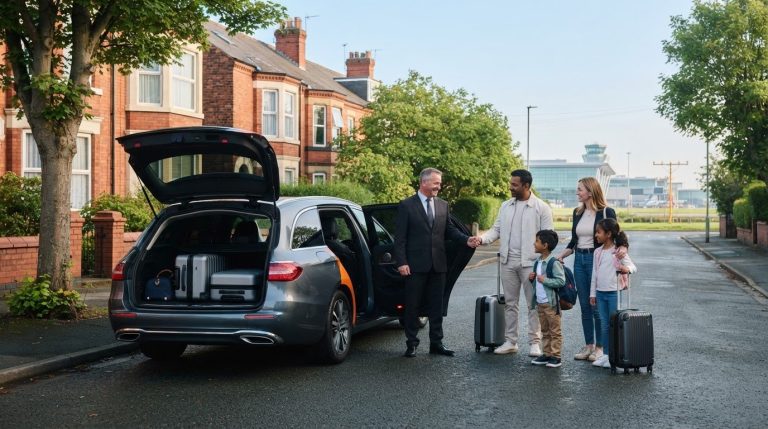
- Door-to-Door Service: Taxis provide direct, door-to-door service, which is particularly useful for those with heavy luggage or mobility issues.
- Availability: Available 24/7, ensuring you can travel any time of the day or night.
Cost Structure
- Base Fare: Typically starts around £2.50 to £3.00.
- Per Mile Charge: Around £1.80 to £2.50 per mile.
- Waiting Time: Charges for waiting time range from £15 to £20 per hour.
- Example Trip (Stockport to Manchester City Centre): Approximately 7 miles, costing around £16 to £25 depending on traffic and waiting times.
Flexibility
- Route Choices: Taxis can take the quickest or most scenic routes based on your preference.
- Special Requirements: Easily accommodate special needs such as child seats or wheelchair accessibility.
Public Transport Options
Public transport in Stockport includes buses, trains, and trams. Here’s a breakdown of their costs and benefits:
Buses
- Coverage: Extensive coverage within Stockport and to surrounding areas.
- Cost: Single fare around £2.50, day passes about £5, and weekly passes roughly £20.
- Service Frequency: Buses run frequently during the day, less so in the evenings.
- Example Trip (Stockport to Manchester City Centre): Approximately £2.50 for a single journey.
Trains
- Speed: Faster than buses, especially for longer distances.
- Cost: Single fare from Stockport to Manchester City Centre around £3 to £5, with return tickets costing around £6 to £8.
- Frequency: Regular services throughout the day.
- Example Trip (Stockport to Manchester City Centre): Approximately 10-15 minutes, costing about £3 to £5.
Trams
- Coverage: Limited to areas served by the Metrolink system.
- Cost: Similar to train fares, with single trips around £3 to £5.
- Convenience: Ideal for specific routes but may require a combination of tram and bus for some destinations.
- Example Trip (Stockport to MediaCityUK): Around £4 to £6, with a travel time of approximately 45 minutes.
Driving and Car Hire
For those who prefer driving themselves, here’s a look at the costs involved in using a personal car or hiring one:
Personal Car
- Fuel Costs: Average fuel cost is about £1.40 per litre. For a car with a fuel efficiency of 40 miles per gallon, the cost per mile is approximately 16p.
- Parking Fees: Parking in Stockport town centre ranges from £1 to £2 per hour, with daily rates up to £10.
- Maintenance: Regular maintenance and insurance add to the cost, averaging around £1,200 annually.
Car Hire
- Daily Rental Rates: Typically range from £30 to £50 per day for a standard car.
- Fuel Costs: Similar to personal car fuel costs, about 16p per mile.
- Insurance: Usually included in the rental cost but can vary based on the provider.
Cycling and Walking
For shorter distances or those who enjoy a bit of exercise, cycling and walking are great options:
Cycling
- Initial Cost: Purchasing a bike can range from £200 for a basic model to £1,000+ for high-end models.
- Maintenance: Annual maintenance costs are relatively low, around £50 to £100.
- Parking: Free bike parking is widely available.
- Health Benefits: Regular cycling can improve cardiovascular health and reduce transportation costs to virtually zero after the initial investment.
Walking
- Cost: Completely free, making it the most economical option.
- Health Benefits: Walking regularly can significantly improve your overall health and fitness.
Cost Comparison Summary
To summarize, here’s a comparison of the costs associated with different transport options for a typical journey within Stockport:
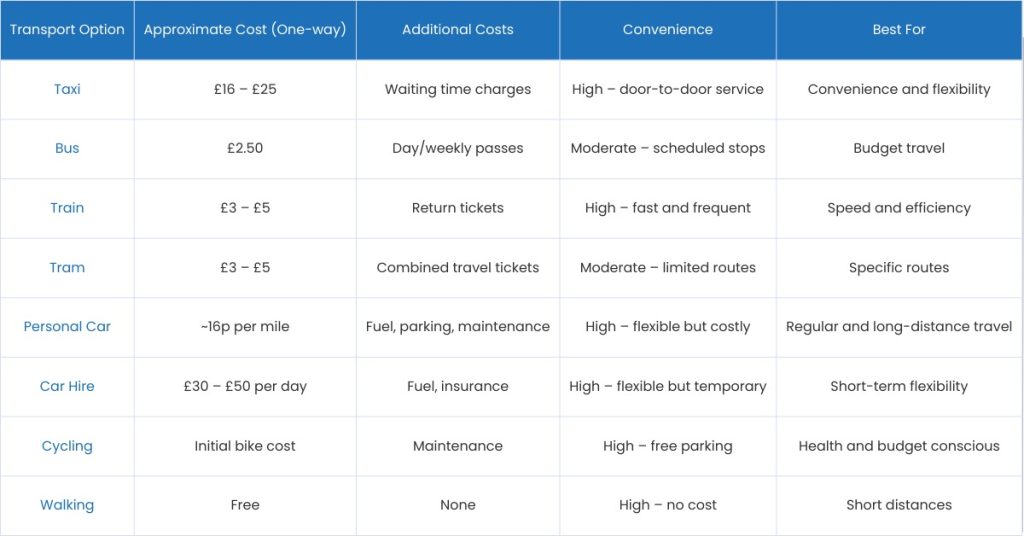
By understanding these specifics, you can make informed decisions about the best transport option for your needs in Stockport, balancing cost, convenience, and flexibility.
Book your Stockport Taxi for local travelling or for airport transfers with GO CAB. For more information contact us at +44 330 053 3763 or submit a quick enquiry form.
Frequently Asked Questions
Which is the cheapest transport option in Stockport?
The cheapest transport options in Stockport are walking and cycling, as they involve no or minimal ongoing costs after the initial investment in a bicycle. For public transport, buses offer the most affordable fares, with single trips costing around £2.50.
How much does a typical taxi ride cost in Stockport?
A typical taxi ride in Stockport costs around £2.50 to £3.00 for the base fare, with an additional £1.80 to £2.50 per mile. For example, a trip from Stockport to Manchester City Centre, approximately 7 miles, would cost around £16 to £25, depending on traffic and waiting times.
Are there any cost benefits to using public transport over taxis?
Yes, public transport is generally more cost-effective than taxis for regular commutes and longer distances. For instance, a single bus fare from Stockport to Manchester City Centre costs around £2.50, compared to £16 to £25 for a taxi ride. Trains and trams also offer competitive pricing and can be faster for certain routes.
What are the advantages of using a taxi service in Stockport?
The advantages of using a taxi service include convenience, door-to-door service, 24/7 availability, and flexibility in choosing routes. Taxis are ideal for those who need direct and immediate transportation without worrying about schedules or parking.
How do fuel costs compare for personal cars versus other transport options?
Fuel costs for personal cars are approximately 16p per mile, which can add up over long distances, especially when considering additional expenses like parking, maintenance, and insurance. In contrast, public transport options like buses and trains offer fixed, lower fares that can be more economical for daily commutes and city travel.